Cast Drawing Using The Sight-size Approach Pdf
Like most things I'm passionate about, I don't know half measures. I'm kind of an all or nothing girl. It certainly has it's downside, but I believe brilliance was never found by spending too much time just dipping your toes in the water.Today is all about sight-size. In it's essence, sight-size is very simple.
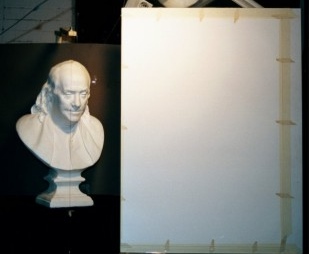
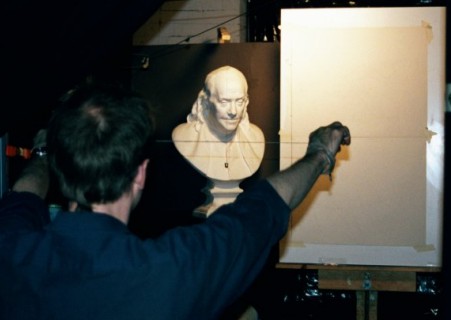
Set your easel up next to your subject and systematically replicate your subject on your paper or canvas. There are a few tricks, but truth be told, I'm finding it requires practice. Lots of practice. The easel should be perpendicular to the ground. A slanted easel might be fine for fast and loose impressionistic stuff, but I noticed as my drawing skills improved I was accidentally compensating for the slant of my easel and distorting my drawing. The height of the canvas or paper should be even with the subject.
This may require you to raise your model, cast or still life. Tools such as a plumb line, and straight edge can help with sighting.I'm just at the beginning of a systematic journey towards mastery, so I'll share more of what I learn along the way.One of the resources I'm using are Bargue Drawings, a 19th century course intended to teach academic drawing. More on that later, but you can download some images below. Heads up - it's a big file with lots of images, but has a good description of sight-size included.
For today’s post I’m going to explain the set up for the final version of the iron painting. It’s a bit convoluted, but hopefully I’ll be able to get it across with the help of a view photos. It seems my still life set ups have become increasingly complicated as I’ve tried to solve a series of problems and to evolve a repeatable working process.Perhaps the biggest change from the way I used to work is that for this one I’m working under artificial light. ‘Artificial.’ The very word seems perjorative. It has to be said, I consider artificial light to be very much second best.
As long as the lights are good quality and a few basic requirements are met I don’t think that there’s anything intrinsically wrong with it, I just prefer natural, diffused daylight for it’s gentleness and subtleties.The problem I have is my window – it’s west-north-west facing which means that I get direct sunlight through it at this time of year in the afternoon. That shortens my working day too much, whereas the lamps let me work for as long as I can keep it up.I’m using Solux bulbs for my lights.

I don’t want to go into the various pros and cons of different types of lights here. It’s a contentious issue among painters, and all the discussions I’ve seen of it on forums owe much more to brand loyalty than they do to facts.Suffice to say that a good working light should have a reasonable CRI and a fairly cool temperature. There’s lots of info about this stuff on the web. These Solux bulbs I’m using have a CRI in the high 90s and a temperature of 4700k. Daylight is, apparently, about 6500k so they’re a little on the warm side, but I haven’t found it to be a problem.
Setting up the LightingThe basic requirement is to have a good light on the subject, and a good working light on the easel, without the easel light affecting the lighting on the subject. That’s where the difficulties can start. For the light on the set up, I’m using two lamps together behind a home-made diffuser. Without the diffuser, the shadows are very hard edged and unnatural-looking.After a lot of trial and error, I’ve settled on a diffuser made from baking paper in a card frame. For the light on the easel, I’m using a third bulb of the same type. Since I’m working sight size and the easel is quite close to the subject, I’ve had to find a way to keep the easel light from shining on the set up. My advice is always to have plenty of card and tape handy in the studio, it’s useful for a thousand things from controlling shadow patterns to making diffusers.
I’ve made a simple screen which is fixed perpendicular to the easel and effectively screens off the easel light from the subject. Here’s the first picture, showing the whole set up:Top left is the diffuser, fixed to an old coat hanger. The iron in its shadow box is in the background there, and the panel I’ll be painting on and the colour study from the is on the easel on the right. I hope that’s clear enough. This photo is taken pretty much from my working position, against the back wall.
This room is really much too small, I’m forever bumping into things.This picture shows the little screen attached to an MDF drawing board on the easel to screen off the easel light from the set up. I’ve stuck some black paper on it so I don’t get coloured reflected light on the panel. That would be bad.What you might also notice from these pics is that the easel is set at chair height. Sight Size From a Chair?I’ve never heard of anyone sight-sizing from a chair before. No doubt they’d throw me out of those posh European ateliers for it.
As long as you get your head back into the same viewing point every time you take a measurement, I cant see it mattering if you sight sized standing on your head. You might get a bit dizzy though which would make the measuring harder.There’s one advantage to sight-sizing from a chair. If your chair is on wheels, like mine is, it takes much less effort to scoot forwards and backwards to and from the easel and avoids all that tiresome walking. Sight size for the lazy man. It does make it a bit more difficult getting back into the same place every time though, which is a must for sight size work.So that’s the last thing I want to explain about the set up.There’s an old print which I think is by Durer, of an artist-type guy using a grid for drawing to help him with the perspective (presumably) and the laying in of a drawing. Here it is:Cool!
Notice how he has his eye lined up with the point of that stick thing, to make sure he gets back into the same position everytime. If he didn’t, the relationship of the grid to the subject would be different and it would throw the drawing out.Well,sight size is a lot like drawing with a grid (I do both) but you create a kind of conceptual grid with the measuring thread.
The way I reposition my head is not that different to this guy.I’ll try to explain:Firstly, I’ve got the usual central plumb line that the sight size method uses. You can see it coming down the the centre of the cloth here.What didn’t come out in this pic is the second plumb line, so I’ve drawn it in in orange.
The photo is not exactly from my drawing viewpoint, so they don’t line up exactly, but each of these plumb lines lines up vertically with a particular point on the subject.As long as I get them lining up to those points from my view point each time, I should be about the same distance from the easel and the subject.What this doesn’t give me is the vertical position of my eye. To get that, I’ve put a bit of tape (see, I told you it was useful for all kinds of things) on the screen attached to the easel, marked by the orange circle in this picThis bit of tape has to line up exactly with the bottom of the shelf the iron is sitting on. Again, it doesn’t in the pic so you’ll just have to imagine it. Basically, I’m triangulating my eye position, to make sure I can get back to it every time after I’ve moved.With those three checks, I reckon I should have my head in the same place every time I go back from the easel to my viewing point to judge. Proper sight size, even if I am sitting down.
Drawing Out – the General to the SpecificHere’s the drawing out stage near the beginning. The vertical construction line running down the middle of the panel corresponds to the central plumb line hanging in front of the subject. The horizontal construction lines are there to help me get the thread level when I’m measuring.I’ve pretty much followed the technique I learned on the Bargue plates of putting in the highest, lowest, furthest left and furthest right points first. In this drawing, I’ve used two points at the top, giving me an irregular five sided shape which describes the main envelope of the composition.As you can see here, I’ve begun the process of refining the envelope down into the smaller shapes, measuring carefully each time and moving from the general to the specific. I’m not trying to make a nice drawing here since it will all be covered anyway. I just want to establish where things go as accurately as I can.Here’s the basic drawing out stage completed.
Cast Drawing Using The Sight-size Approach Pdf Software
The next stage after this was to go over the charcoal with raw umber thinned down with turps, and to leave it overnight to dry. That helps to keep the drawing in place as I start to work over it on the next stage, the ‘rub-in’. That’ll be the subject of the next iron update post.For anyone not farmiliar with the sight size method, you can have a read through this and/or have a look over. If anything I’ve described here isn’t clear, please leave a comment below and I’ll try to explain further.Yet again, I’d planned to cover more than I’ve got time to do today. I’ve been preparing a post on the pros and cons of sight size as I see them which was going to be included here, but I’ve gone on quite long enough today I think and I need to get back to the easel.The rub-in awaits! I never lost hope that you would post again. I figured “he must be re-configuring his method again.” Fine tuning is more like it.
Although you are as hard on yourself as ever, it must be very gratifying to see so many artists welcome you back. Actually, I think it shows how much interest(and hunger) there is for a no nonsense approach to learning this thing we call painting.Your new work was worth waiting for. Thanks so much for all the time and effort you take to detail the methods and struggles you go through.Learning to see is one thing.
Interpreting and orchestrating beauty so others can see and enjoy it is the gift of the true artist. You my friend go beyond that. You are also a gifted teacher.sorry my friend but it is true.
You are stuck with us. This is wonderfully clear and so helpful, Paul. You’ve put in lots of ideas and tips (especially relating to working while sitting and orchestrating light with shades in a confined space) which I’ve never seen so well articulated.However, I do think you should title this “The Lazy Artist’s Approach to Sight-Size” since there are lots of women artists who hope to do more sitting around and less standing (like me).I wonder if you have ever tried to measure the exact height of your personal eye level and put a marker (the ubiquitous piece of tape, of course 🙂 ) on the backdrop behind the still life subjects. When I do this I draw perspective lines up to the eye level marker on my canvas; I think this helps me find volume, reminds me whether I am looking up or down on something, and especially helps when drawing elipses. I would love to see you experiment with this and see if it helps you at all, because it might be a superfluous step that doesn’t accomplish much after all is said and done and maybe I needn’t bother.
You are already incredibly accurate, so maybe it could help with speed?I really enjoyed seeing the space where you work – sort of a glimpse into your mind. And I think this iron has so much life and personality, if such a thing can be said of it, and why not, anyway? Yes, I agree with the others, Paul, you are Brilliant!I just feel less than brilliant, cause I don’t quite get 1.how the screen is positioned to screen out easel light – is one edge flush to the drawing board/easel and set up- is your drawing board/easel set exactly next to the iron set up or a foot or two in front of set up? And, 2., the 3rd measurement mark – ‘vertical height of your eye’ with the tape – Are you saying the horizontal edge of the ‘ironing’board is at the same height as your eye when you’re in the correct postion? In the orange circle, is it the straight edge of tape or the smaller bit off to the right – don’t understand how either of these marks your eye height with bottom edge of the board the iron is placed on?Man, I feel dense – don’t even know if I’ve asked the correct questions understandably!
Maybe I better read through your lesson and looks at pics a few more times!PS: I love that lighting set up! Peter, Peter, it’s so nice to hear from you. I hope everything in painting land is going well with you.But you do me far too much honour. I’m just some bloke trying to learn how to paint.
I do want to demystify the process as much as I can though, my process anyway. Learning to paint IS hard, as we both know, but it’s NOT impossible! You are proof of that as much as I am.I’ve been quite moved by the response, I must admit. In fact, let me take this opportunity to say a big thank you to everyone who’s posted and welcomed me back. You’ve all inspired me. I take at least as much as I give here.I promise I’ll do my best to keep it coming Sarma.
At least since I work at such a tortoise-like pace now I only have to post once a week to keep up 🙂Linda, you’ve caught me out being sexist! But the lazy man in the title refers to me.I think that’s a brilliant idea about the tape to mark the eye level and also the perspective lines. I can’t see it being anything but a help, I’ll give it a go in the future.The iron does have personality I think, you can absolutely say that about inanimate objects.
Well, some of them anyway. The posh iron with all the scary buttons that Michelle uses to do the real ironing in this house wouldn’t look quite so good I don’t think.
And before you accuse me of being sexist again, I don’t do the ironing because I’m so rubbish at it I’ve been banned. I do the cooking 🙂Hi Helen. It’s not so much the photo comment itself that bothers me I don’t think, it’s that it points up what I think is a somewhat worrying thing, that the photographic image has become our yardstick for reality. I’m sure lots of photographers would argue with me about that, but this is my site so I can say what I like 🙂 I just think that people, including me, forget to use their eyes these days.
I have a sneaking suspicion that the camera, especially the digital camera has made a certain form of image making so easy that it cheapens it, and we forget to look. There aren’t any photographers here are there?
Good.There are photographers who’s work I really like, like this bloke:. He hasn’t forgotten how to use his eyes. Hi Marsha, we cross posted, sorry.I’m glad you asked those questions since you are most definitely not dense, it just means that I haven’t explained it clearly. I’ll try to answer:is one edge flush to the drawing board/easelIt’s flush with the drawing board, at right angles to it. It’s taped on down the back. So it’s like a little room with two walls around the panel I’m painting on.is your drawing board/easel set exactly next to the iron set up or a foot or two in front of set up?It’s about a foot in front of the set up. It doesn’t have to be right next to the set up for sight size.
The closer the easel is to you (assuming the distance between you and the subject is constant) the smaller the subject will appear in the picture. I had to reduce the size a bit so I brought the easel forward.Are you saying the horizontal edge of the ‘ironing’board is at the same height as your eye when you’re in the correct postion?This one’s a bit harder to answer, since the photo is so rubbish. The vertical band to the right of the set up in the photo isn’t tape, it’s the screen seen side-on. The bit in teh orange circle is a bit of taped wrapped round the nearest edge of the screen. The top edge of that bit of tape has to line up with the bottom of the shelf From my view point. Damn, this is so hard to describe in words! Is that any clearer?
Let me know if it isn’t, I’ll figure out a way to show it in a drawing or something. Thanks for trying to explain, Paul. I get the first part now.Could Linda’s terrific suggestion of a marker at the eye level (this is the horizon line, right?)etc., replace that bit of tape? If so where would it have been placed for this setup?somewhere on the white cloth, or on the table edge? I know you were using this tape just as a check for if you were in the right position at the easel – well maybe you could draw a diagram – but please don’t site size it!!!I don’t mean to cause you grief, Paul, just want to understand!
Yes, Linda’s idea of the tape at the back on the eye level could be used in the same way. It would be put in the rear of the shadow box behind the iron I think. But you’d still need to visually line it up with something closer. The point is to get the head in the same vertical position each time.
Sight size is done well back from the easel and subject. You judge a measurement first, then physically move over to the easel to make the mark.I’ll try to come up wuth a diagram to show it. I’ll have to do a value and a colour study of it first though, so it may take several weeks. (Just kidding – I’ll try and get something together today.). Paul-Thanks for the comment on my blog!
You are very kind, though today working from life I totally bombed. I had a moving target, so I am going to cut myself some slack and get back to work tomorrow.I have been peeking in at your blog for a long time, and didn’t know until today that you had resumed posting! I love all the detailed info you give on your set-up, etc.
It will hopefully help me as I am trying to figure out how to work in my new space. I especially need to figure out how I can control the lighting.Anyway, glad to see you’re posting again, love your work.Cheers,Lacey. Hi Robert, great to hear from you. Hope you’re having a good holiday.Thanks for the kind words.
How is your drawing going? Are you still working on your values?Hi Lacey.
I thought that was a lovely drawing. ( for those who haven’t seen it) And as I said on your blog, it’s good to see someone having the courage to work from life, so many people work only from photos these days.We all bomb sometimes, I do that’s for sure. There’s several ‘bombed’ paintings from the last few months that I need to post. It’s not nice when it happens, but there’s always a valuable lesson to learned from the failures I think, even if it’s not immediately obvious what it is.As for controling lighting, my top tip is lots of card and masking tape 🙂. Hello The painting looks superb!!
I wish I could do something like that one day, really beautiful!I dont know that did you knew about all this, but anyways:)I used to draw like that before i got into florence academy of art. I mean picking vertical and then horizontal measurement with plumbline / knitting needle or with eye. It works on still-life objects and bargue. But not with model at all.We only pick top and bottom. Not usually left of right (the bargue book method is very strange, we dont use it almost at all).
Like Harold Speed says, you should take only three measurements from model, and the rest you should eyeball. I think our method is something like that.
Just simple very precise 2d shapes.The first vertical point then horizontal point, then the dot, and at the end the tilt method is called “drawing with dot there” and its not very accepted method there. Some of the online articles tell yo draw like this. But imo it doesnt work at all, when you are asked to do very precise stuff from live model.Going to exact dot to exact dot, is very slow way to draw. Its also very hard to capture gestures and rythms with that method.Anthony Ryders book instructs just going to one place to another on drawing.
And estimating how much did it took, by comparing it to other lenghts. I think this covers pretty much the method that we used on the academy.They had an excercise where they cut simple angular 2d shapes (triangles, hexagons etc) from black cardboard and put those to blanc paper. On the side of that “shape paper” they put tracing paper where they had copied the lenght of one side of every shape of the paper. Then you are supposed to copy the shapes on the tracing paper calculating the tilt and then the lenght of the line.
Forming exact same shapes on the tracing paper. Later you can check the shapes by placing the paper over the original shape paper.This is the same method Horace Le Coq (teacher of lhermitte, rodin and fantin latour) used on hes “2d shape memory method”.One way to match rythms from models is to visualize, profiles, sihlouettes of continents, animals etc to the 2d shapes. Kind of same way as child would stare into clouds and pick all kinds of creatures from the shapes of clouds.Like on the left contour of the torso you can see a profile of ball nosed man.On the same way as you can spot a creature, profile etc. You can kind of intuitively put geometric shapes to places.So atleast on florence academy the drawing method is much more about intuitive sense of 2d shapes.
We dont go almost at all to point to point at the beginning. And in the end part when its nescesary to follow the outline very precisly we might put something big in with the “vertical horizontal dot” but the rest of the that part we usually do by calculating the lenght and tilt of the line. Hi Kai, thanks very much for that interesting post.I think it’s important to remember that there are many approaches to drawing, and none of them is any more ‘right’ than another. They all have advantages and disadvantes, and should be approached with an open mind. The danger of developing a kind of brand loyalty for a particular approach is that you may miss out on something useful from another which you either haven’t tried or haven’t used enough to know well.Certainly I can see that there are problems using this strict sight-size measuring technique with a model. It’s very useful for stationary things like still life, casts and copies. Not much use at all for landscape 🙂The copying shapes idea you mention is very interesting.
I must gove it a go. I haven’t got Tony Rider’s book, but woud like to get it at some point. I’ve read a little about Lecoq too and his memory training method. It looks very interesting.But this method of sight-size also helps with memory training I think, since the mark to be made must be visualised whilst standing back from the easel and held in memory until you get to the easel to actually put it down.Personally I think the best approach is to try as many methods as you can, without prejudice, and select from all of them the elements which work best for you. God knows this drawing stuff is hard enough without limiting the contents of your toolbox.
This must be one of the most interesting blogs I’ve ever read. Your artwork is amazing and to read how you do it and the set-up plus struggles is very inspiring. Thank you for allowing a peek into your artistic journey.I absolutely adore the silver vase and was enthralled to read about how you progressed to the finished piece.I am still reading about the iron, but just had to comment.My only criticism is that this is all so interesting I could spend all day reading and not get any painting done at all. 🙂Best wishesSharon. I thought I should elaborate on my comment above.I read this post and felt like cheering. I do hope that one day that you will consider teaching – if only as a sideline to painting.What I really appreciate is the way you describe your approach in such practical and pragmatic detail.
It is such a good service that you do, to make the things you have learned accessible to others in an unintimidating way.Sometimes information about artistic techniques is couched in an almost mystical, elitist wrapping that can make everything seem far more complicated than it really is. It takes a special level of skill and goodwill to be as clear and encouraging as you always are. I would defy any young artist to read your blog and feel discouraged. Thanks very much for elaborating Sue. You make an important point I think.I agree with you.
There’s a tendency among ‘experts’ in all fields to obfuscate, mystify and glorify. It’s particularly endemic in art teaching.
I don’t know what the motivation is, I suspect that it happens for a variety of reasons.A lot of art teachers today are plainly not qualified, often they can barely draw or paint themselves from what I’ve seen around the web when looking for a good teacher locally myself. I think that too often students are encouraged to find and express their ‘personal vision’ without being given the skills or the tools to do either. That was certainly true of my degree course twenty years ago. These so-called teachers must mystify and obfuscate in order to misdirect attention away from their own incompetence and from the fact that they really do no teaching at all.At the other end of the scale, western art of the past, particularly of the 19th century, is seen as the apex of human artistic achievement, an example to be emulated. Relentless drilling in academic technique is seen as the be-all and end-all in some quarters. Wjilst I certainly see the benefits of that approach, and do more than a little of it myself, I think a possible problem with an exclusively ‘academic’ approach is that it takes away the initiative from the student.I have tremendous respect for the art of the past, but this is the 21st, not the 19th century. The world has changed, and we can’t afford to be culturally imperialistic and isolationist any more.
In my view, lessons learned from the western classical tradition of the past need to be applied to our more inclusive and globally oriented present.I do think much of the western tradition has been lost, or almost lost, in recent years. But I think we should be wary of allowing the pendulum to swing back too far and making the same mistakes that modernists and post-modernists have sometimes made, blinkering ourselves and allowing an overridi.
Comments are closed.