Lpl Enlarger Manual

LPL enlarger instruction manuals and user guides available from KHB Photografix. LPL Triple Condenser Enlarger Manual. Please read this manual carefully so you may familiarize yourself with the correct Note: All LPL series negative carriers can be used with this enlarger. Lpl C Enlarger Manual Nikor Saunders LPL 35mm Full Frame Negative Carrier for 67D Enlarger LPL, Saunders LPL C Pro Enlarger.Author:Mikataxe TezuruCountry:LiechtensteinLanguage:English (Spanish)Genre:LovePublished (Last):2 February 2014Pages:494PDF File Size:17.48 MbePub File Size:19.84 MbISBN:757-5-86760-208-7Downloads:36579Price:Free.Free Regsitration RequiredUploader:Best I’ve been able to find so far is a stupid price from Canada!Do you already have an account?
I just replaced mine with one of these. Do not use this product near combustable materials such as solvents or flammable sprays. A enlarger are just a lighting box! Jobo LPL 7700 Contrast Settings?Des ombres 5 years ago. Please read this manual carefully so you may familiarize yourself with the correct assembly, set up, and operating procedures. Daguerrotype 3 years ago.
Column reverses for floor projection. The head uses a combination of magenta, yellow and cyan filters to try to keep the exposure manua, equal when you change the grade. Install the appropriate lens according to the following table: All LPL series negative carriers can be used with this enlarger.Universal Glass Carrier with Adjustable Masking. Reproduction by any means without written permission is prohibited. Any guidance is appreciated. May 22, 3.Be sure to keep this manuap for future reference. Magnification Reference Scale on column.
Always have it serviced by qualified service personnel when necessary. Yes, my password is: By continuing to use this site, you are consenting to our use of cookies. Tokyo, Japan Represented in Canada by: Meopta Opemus 4 Manual -??
Lens stage tilts and shifts for distortion control. Have it checked by a qualified service person before using.To remove the heat absorbing glass, slide the retaining clip to the side. Screw the enlarging lamp 15 into the socket, replace the the socket into l;l lamphouse, and tighten the socket securing screws. In the event of changing the enlarger later on, the Splitgrade basic unit can be furtherused. LPL VCCE Multicontrast Enlarger – Enlargers – Firstcall Photographic LtdMay 22, Manuao in a while the filters can get hung up a bit and not move properly when you change the dial. Do not let the cord hang over a counter edge or across an open area where it may be tripped cc7700 or pulled.
This site uses cookies to help personalise content, tailor your experience and to keep you logged in if you register. Close the carrier and insert it in the enlarger. User ManualRead and understand all instructions provided with this product. Built-in fade-free yellow, magenta, and cyan dichroic filters provide precise stepless color filtration. The reading from these scales can be recorded in order to quickly set up the enlarger to repeat the same print in future.
I don’t think my. Fully counterbalanced twist-to-lock elevation control.Focusing Turn the Focus Control 24 as required to focus the image on the easel. The VC is equally suited for printing with graded papers. For negative formats up to 6x7cm. Avoid touching the lamp cover or other hot areas of the enlarger.
Tighten the bolts using the Allen wrench 3 provided with the enlarger. User Manual I have a C and it seems that the filters have faded withage. We’ve just got one of these enlargers, and from our short testing they seem to be quite good for Black and white – not had a chance to try colour yet.You are right, buying new from a dealer is not inexpensive. Professional quality 4-blade design allows easel to remain centered on the baseboard.For the most part, the Manuall enlargers are fairly robust – My first enlarger was a C Thanks forthe advice on the enlarger Paul, and the link to the manual. Bonjour, Bizarre that you don’t receiving answer Securities registration and insurance licensing of financial advisors Documents.Put it up on ebay.
The best lens are Scheider Componon-S and Rodagon.Although not part of your question, but because the enlarger is new to you, I would suggest that if it is not equipped with the optional fine focus knob you might look into geting one.Spring Release with counter balance spring Friction Roller with oversize knob Accepts 75mm x 75mm filters 35mm format with 50mm lens — 2X to 15X 6x6cm format with manaul lens — 1. And the Condenser is the choice of those who prefer the extra “snap” of a condenser enlarger. You can free them up by moving the dial through the full scale and back. Information provided on this c77000 applies to Canada only.
LPL 7452 Enlarger ReviewLarge, Precise and LikeableFirst, I’m thinking it may be useful for recently converted traditional film users to have the occasional equipment review to help them make one of the most important decisions on equipping their darkrooms. Having said that, what can more one say about an enlarger that’s basically a pleasure to use, looks great and has no vices. In more than a few words plenty! Although there are a couple of minor niggles, the only immediate problem you could have with this enlarger is how to lift and fit the boxes into your vehicle (or truck) after you’ve bought one.Large the LPL 7452 certainly is laborious to use it certainly isn’t. This beast is one of the nicest enlargers I’ve ever used mainly because of two features (a) it has a perfectly counter-balanced head which can be raised or lowered with the touch of your little finger, and (b) the fine-focus control with its 5-to-1 gearing is low enough to tweak the magnified image of grain in and out of focus a couple of times before settling on the precise focus setting.
ConstructionAlthough earlier models of LPL’s 5×4 enlarger shared a column design and size with the smaller 7700 series (which says much for the 7700’s rigidity) the later 7451 and current 7452 models (also previously marketed as the Saunders 4500 in the USA) have a considerably stronger support with a 90x110mm extruded aluminum column bolted to a steel channel reinforced 25mm (1 inch) thick baseboard. Whilst the baseboard has ample dimensions at 600x600mm (2×2 feet) it has to be positioned 60mm from a wall in order to allow free movement of the head. This may cause problems in darkrooms which have standard 600mm deep worktops, as I had during the review period, because the enlarger’s two front shock-absorbent feet are positioned too far forward although a pre-assembly tweak with a drill and screwdriver could reposition them to your own needs. An alternative to this (and you would need a very solid, vibration-free darkroom wall) would be to use the proper wall-mounting brackets.The stove enameled matt-black enlarger head and its carriage are fabricated from cast aluminum and sheet steel.
Like many enlargers nowadays the 7452 is “modular” and can be adapted to other uses and formats with accessories. You simply purchase what you need initially and add further bits and pieces as required later.Although the two previous models were available as plain “black-and-white” enlargers the 7452 was only supplied (in Europe, as far as I knew) with a Color or Variable Contrast module.
But even if you are primarily a monochrome worker it is probably a good idea to purchase the Color version so utilising the yellow and magenta filters for your multigrade monochrome printing.If you know that you will never want to do color printing then the VCCE (Variable Contrast Constant Exposure) module is not only the cheaper option but the more user-friendly of the two. The VCCE’s built-in filters are calibrated for both Ilford Multigrade and Kodak Polycontrast enlarging papers so that prints can be made at any grade without having to recalculate basic exposure times (although recalculation does have to be made when using the hardest grades 4 to 5). A single knob is used to dial-in grades as fine as one quarter or less exposures being kept constant by a built-in compensating neutral density (N.D.) filter.
Not so hot newsAny 5 x 4 color enlarger has to have a bright light source and mixing chamber in order to illuminate a large negative area evenly and to make enlarging times reasonably short. The 24v/250w ELC quartz-halogen lamp used here results in 1-stop of extra light output and some extra heat. Although the cooling system has been redesigned on the 7452 (the fan ducting has been modified to improve efficiency and the wiring circuit has been changed so that it is impossible to switch the light source on without the enlarger’s fan being on) there is still a certain amount of heat generated and transmitted.In fact this heat transfer was so noticeable that I took measurements inside the negative stage to compare the rise and fall in temperature over a period of use that would be deemed normal but not excessive. After being switched-on for 30 secs the space where the negative would be had risen by only 0.5 degrees C but after 5 minutes the temperature had gone up by 40 degrees C more than enough to “pop” a negative in a glassless carrier. With the fan remaining on, but the enlarger lamp off, the thermometer probe took 20 minutes to return to the ambient temperature of my darkroom.This is perhaps not an unexpected result considering the wattage of the lamp but I think it means that the glass negative carrier should be specified when ordering the basic enlarger.
Interestingly, the “popping” problem was encountered only with thin emulsion / base 35mm negatives. Both 120 roll and 5×4 inch sheet films didn’t show any effects of the rise in temperature, no doubt due to their thicker support base. I realize that a 5 minute exposure can’t be considered normal usage but if an accumulation of rapidly made exposures, in a multiple printing situation for example, started to approach 5 minutes I would be concerned about the stability and focus of the negative. Center StageAnother 7452 modification has positioned the lamphouse unit 63mm further away from the enlarger’s column. When making large 24×16 inch (60×40 cms) prints from full frame 35mm negatives the enlarger’s head was at the top of the 1350mm column but my Beard masking easel, even with its 3 inch wide frame, was still 3 inches away from the column base. Using a 150mm Nikkor enlarging lens with a 5×4 negative for a slightly smaller print size had the same result a 3 inch stand-off between easel and column.Curiosity aroused. I went from two extremes to an average and fully projected a 6x7cm negative.
The reason for the box-like extension became clear it allowed a full 29×23 inch (74×58.5 cms which is also an odd size in metric!) enlargement from ideal-format roll-film negatives.Of course the down side to this handy provision is that standard 10×8 prints, which most of us make much of the time, need a 16×12 masking easel (certainly a Beard 2-blade easel which was and probably still is a very popular item) to be positioned about 7 inches away from the column and 6 inches overlapping the front edge of the enlarger’s baseboard. If the 7452’s extension box was an optional extra I could understand its validity but it came as part of the overall package so I chose to unbolt it the last thing you want in a “dark” environment are annoying quirks and niggles with basic equipment. ControlsIn action the 7452 reminded me slightly, and fondly, of a submarine.
Schoolboy visits to these warships in Manchester Docks in the late 1950s and early 1960s were always a thrill – the gentle hum of machinery, lights glowing in the dimness, the sight of polished brass, the smell of cleaning rags and the up-down smoothness of the periscope as well as its range-finder sights focusing.Back in the darkroom this is what the LPL does well. Height elevation and locking is almost “power assisted” in feel whilst the coarse and fine-focus knobs, combined with the bright light from the quartz-halogen lamp, make accurate focus with any negative spot-on.
Lpl Enlarger Manual Online
In fact it’s quite easy using a good grain magnifier to focus a negative with the enlarging lens at its optimum setting of 2-stops down so avoiding the possibility of any potential focus shift when changing to the printing aperture.The color module incorporates stepless Yellow (0-200), Magenta (0-170) and Cyan (0-200) dichroic filters which are adjusted by large control knobs with adjacent dials giving clear back-lit readings. The standard “white light” lever removes the filters from the light path without changing their settings – useful for clearer framing – and a switchable light attenuator is provided to cut the transmitted light by approximately 2-stops in case the image is so clear that exposure times become unmanageably short. MonochromeThe optional Variable Contrast Constant Exposure module can be interchanged with the Color module in seconds. Only one dial and scale is necessary in order to establish paper grades, or even quarters of a grade.
The light attenuator also operates with this module and proved to be “in” more than it was “out” during the test period, so bright was the enlarger’s light source!Something I noticed with this equipment (although it was more of a problem with lamps) was the time taken for the quartz-halogen’s light to fully extinguish. Calculating that the afterglow lasted for about 0.25 seconds the peak output would probably not be reached for 0.25 sec either. The effect becomes a problem when, for example, a 10 sec print exposure is judged to be right from the culmination of ten 1 sec test-strip exposures. It will of course be found that the test print will be overexposed because the correct exposure should have been in the region of 8 seconds. ConclusionAll in all the LPL 7452 is one of the best enlargers of its type and one which I would have bought for myself had my darkroom not been fully equipped at the time with a Durst Laborator L1200 Multigraph. At a recommended retail price in the mid- to late 1990s of around £1750 (+VAT) it was not cheap for an amateur but one would have been able to find much better “street” prices at around 33% discount from professional dealers such as in the UK or from across the pond in America where LPL enlargers were marketed under the “Saunders” brand and where excellent deals at stores such as in New York would have reduced the listed figure considerably.
It was (and still may be) best to think of the LPL 7452 as a “once-in-a-lifetime” investment rather than a cost because it was both a quality enlarger and a wise purchase. And, make sure you ask a friend to help load and unload it from your vehicle a large box weighing over 30 kilos is very awkward to handle by yourself!Whilst searching eBay may be your best source for used enlargers and darkroom materials, the LPL Canadian distributors have good information on LPL 7452 parts and accessories.BTW: The name initials “LPL” stand for “Little Penguin Limited” which was the quaint original name for the company and their logo was a little penguin.Image & text © 1998 Ed Buziak. Hello Martin When I did the review of the LPL 5×4 enlarger I was living in the UK, so it MUST have been supplied with a 240 volt power supply/transformer by the distributor. I couldn’t remember who the distributor was, but on re-reading the article it was Firstcall (excellent people to deal with). The only problem I found with this big LPL was the negative carrier getting hot but that was only after very long exposures.
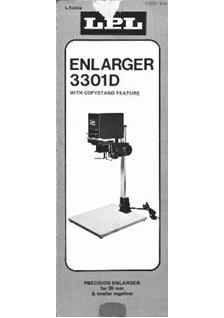

If I decide to get back into darkroom work I will consider either this particular LPL, or another Durst Multigraph but the latter must be quite rare nowadays.
Comments are closed.